The Permafrost under Western alaska Is melting. now, everything in NuNPITCHUK is sinking.
The southwestern Alaskan village of Nunapitchuk is home to the Yup’ik Alaska Native people. For thousands of years, the residents ancestors lived across the tundra region nomadically, moving from summer camp to fall camp to winter to spring, chasing fish and moose and cloudberries: whatever was in season. But in 1973, the state of Alaska passed the Molly Hooch Act, strictly requiring all Native Alaskan youth to attend brand new local schools. The state chose the land for the village of Nunapitachuk because it was the best place to build a port. Families settled around the school.
The tundra was always fragile, and heavy modern infrastructure tore up the soil. But it got worse: the permafrost started melting at an incredible speed. The arctic is warming at almost four times the speed of the rest of the world, and it’s not stopping.
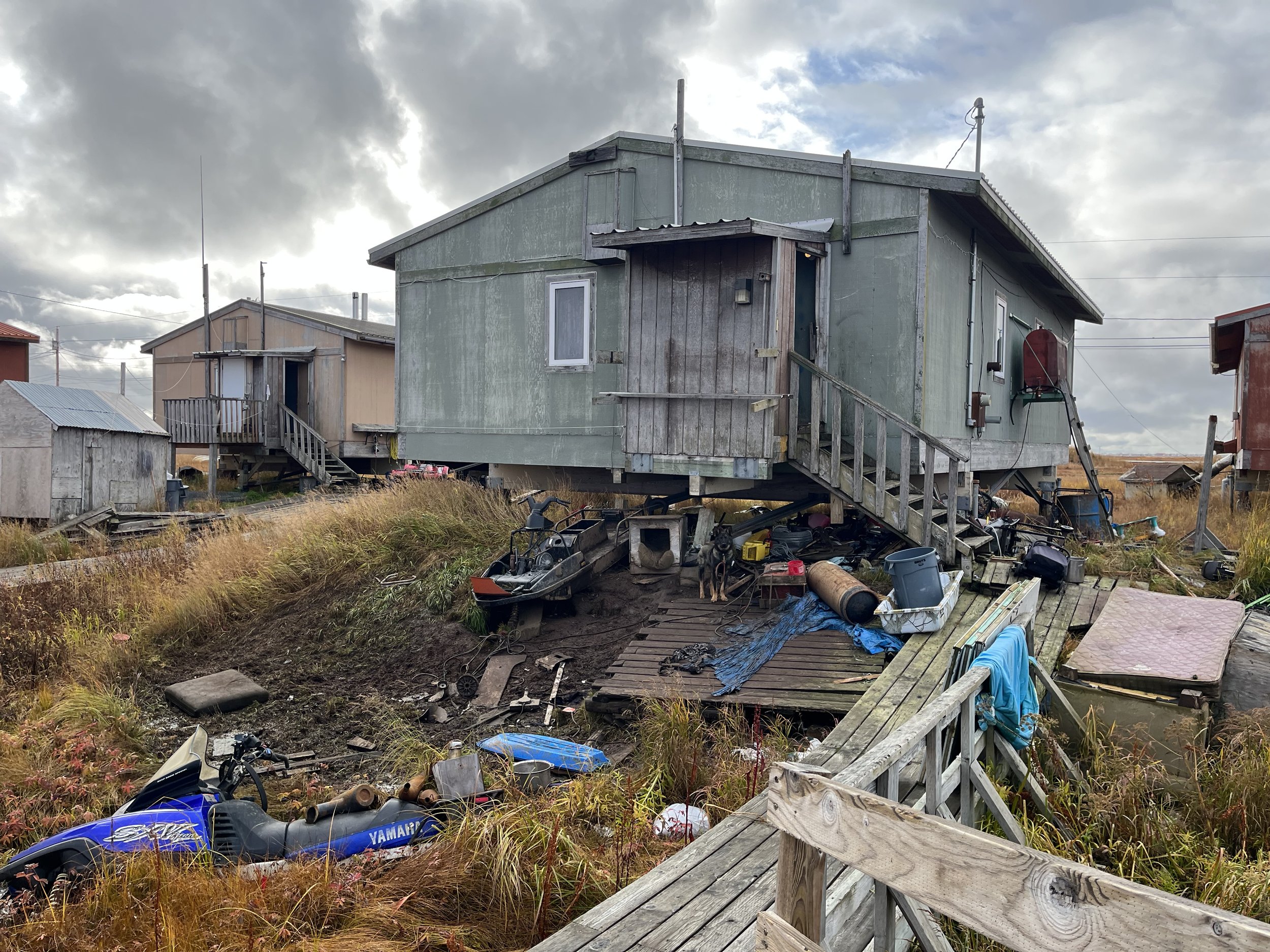
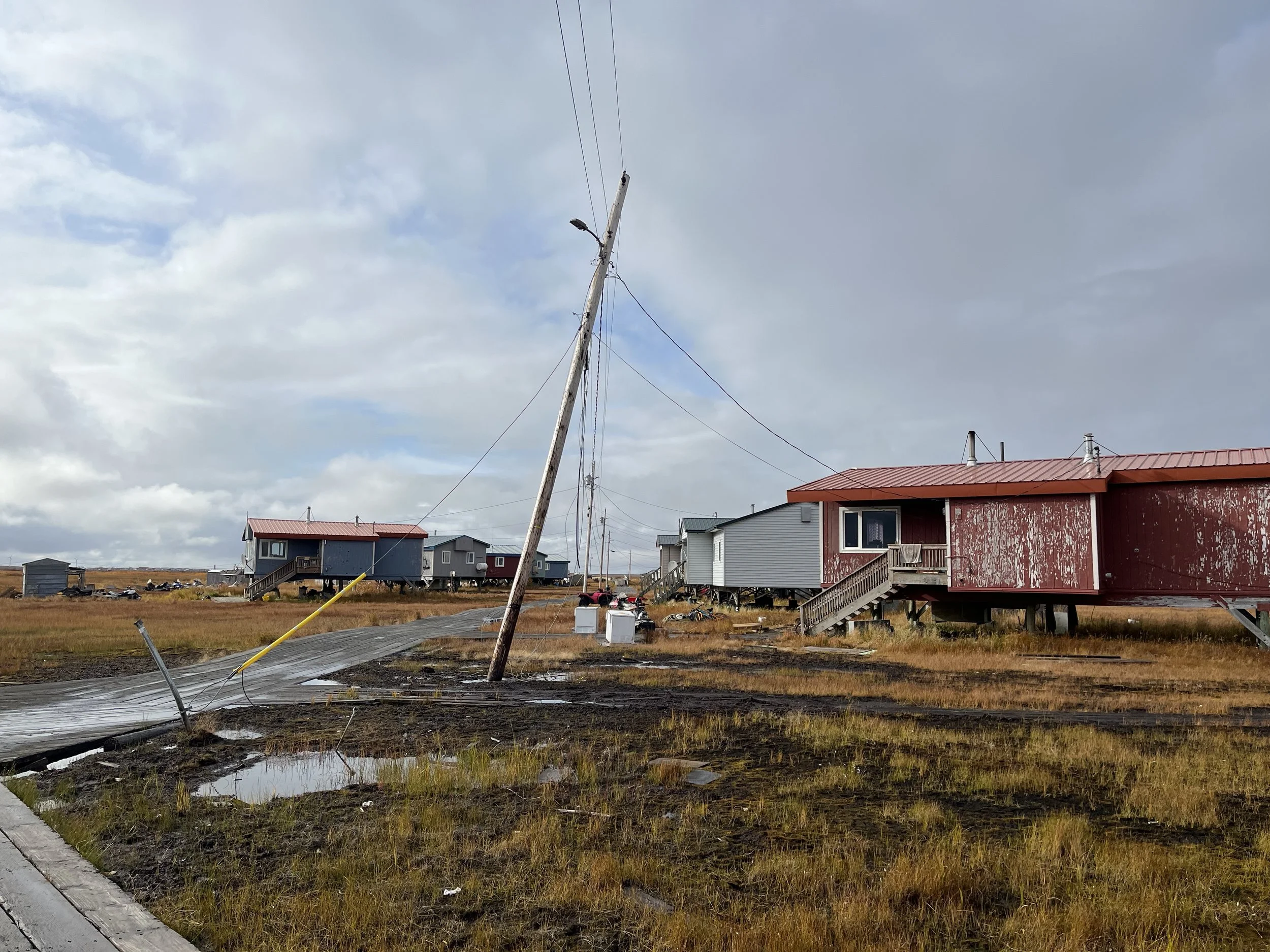
As the permafrost melts, all of the buildings, infrastructure, and houses, are sinking into the ground. Almost every building is destabilized, some let in water causing mold. Some houses are on their own little hills as the soil erodes beneath them. One neighborhood was entirely abandoned. Many houses became so unsafe they get knocked down, and many of those residents move in with family. Now houses are overcrowding, causing health issues. The people, who continue to hunt, fish, and pick berries for subsistence year round, are watching their enviroment become increasingly inhospital for the salmonberries and wild cranberries they used to harvest, and salmon, moose, and birds they used to hunt.
In Fall of 2023, Nunapitchuk’s tribe, city, and corporation signed a unanimous declaration that they want to relocate the entire village, and the village unanimously voted to support the decision.
Relocating Nunapitchuk, to another nearby stretch of land, is going to take paperwork, proof, plans, and over a quarter billion dollars. Luckily, Nunapitchuk has some powerful leaders and allies. They want to use Nunapitchuk as a pilot program to teach the government agencies how to work together to find the impending climate-change driven relocations in southwestern Alaska.
1. The houses
listen:
A Four Part Series
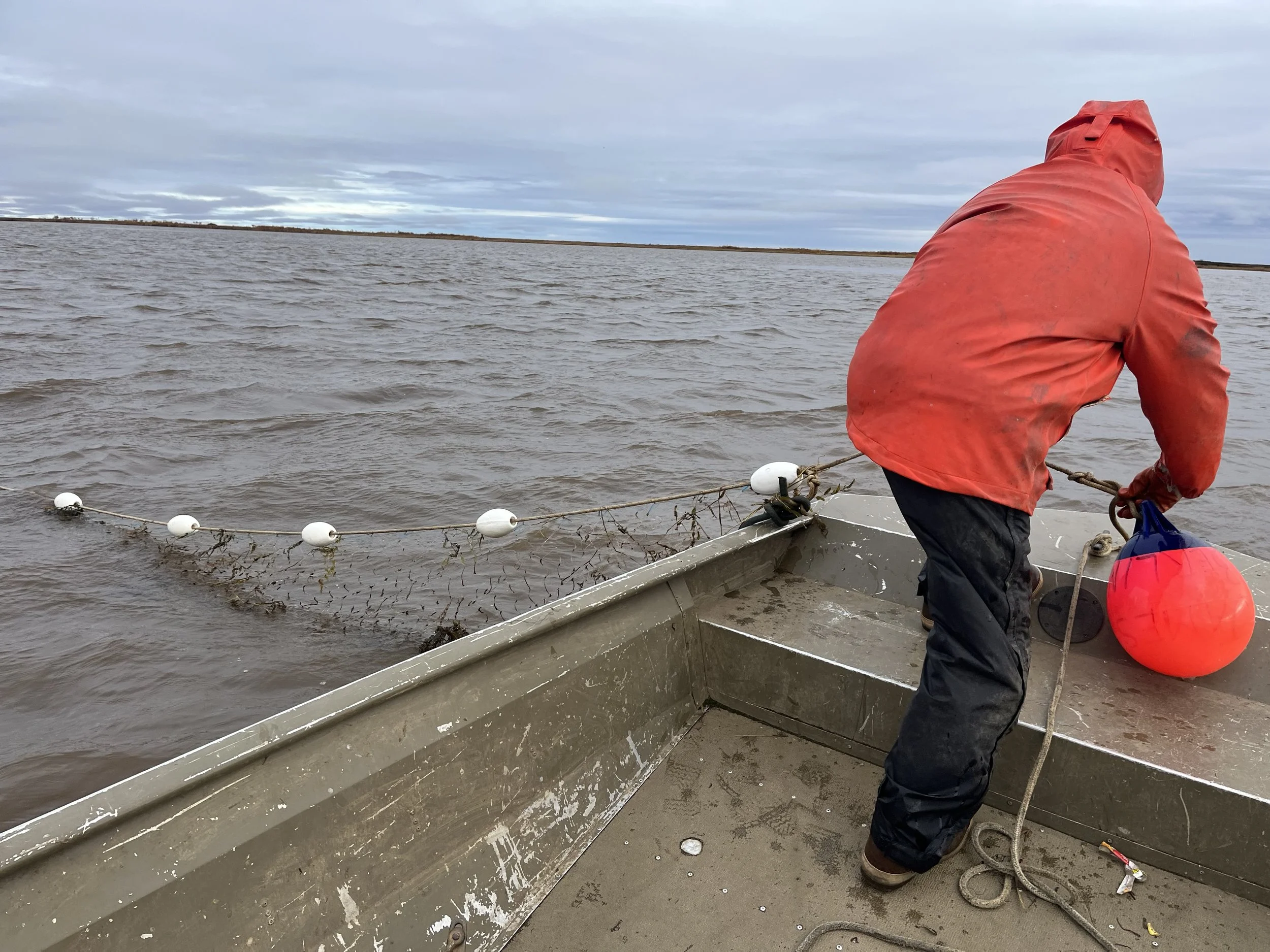
Residents recall how much easier finding food was growing up. You could stroll around the tundra and find eggs and berries, and barely leave the dock before finding fish. Now the land is barren mud. There’s fishing restrictions, and safety concerns.
2. The Infrastructure
listen:
It’s happening all over town— the houses are sinking, For some houses, the soil has eroded from underneath, or the yard is a bog. One neighborhood is entirely abandoned, the town is dotted with knocked down plots. People are moving in with relatives. Now there’s overcrowding, flooding, health issues, and chronic mold.
3. the Outdoors
listen:
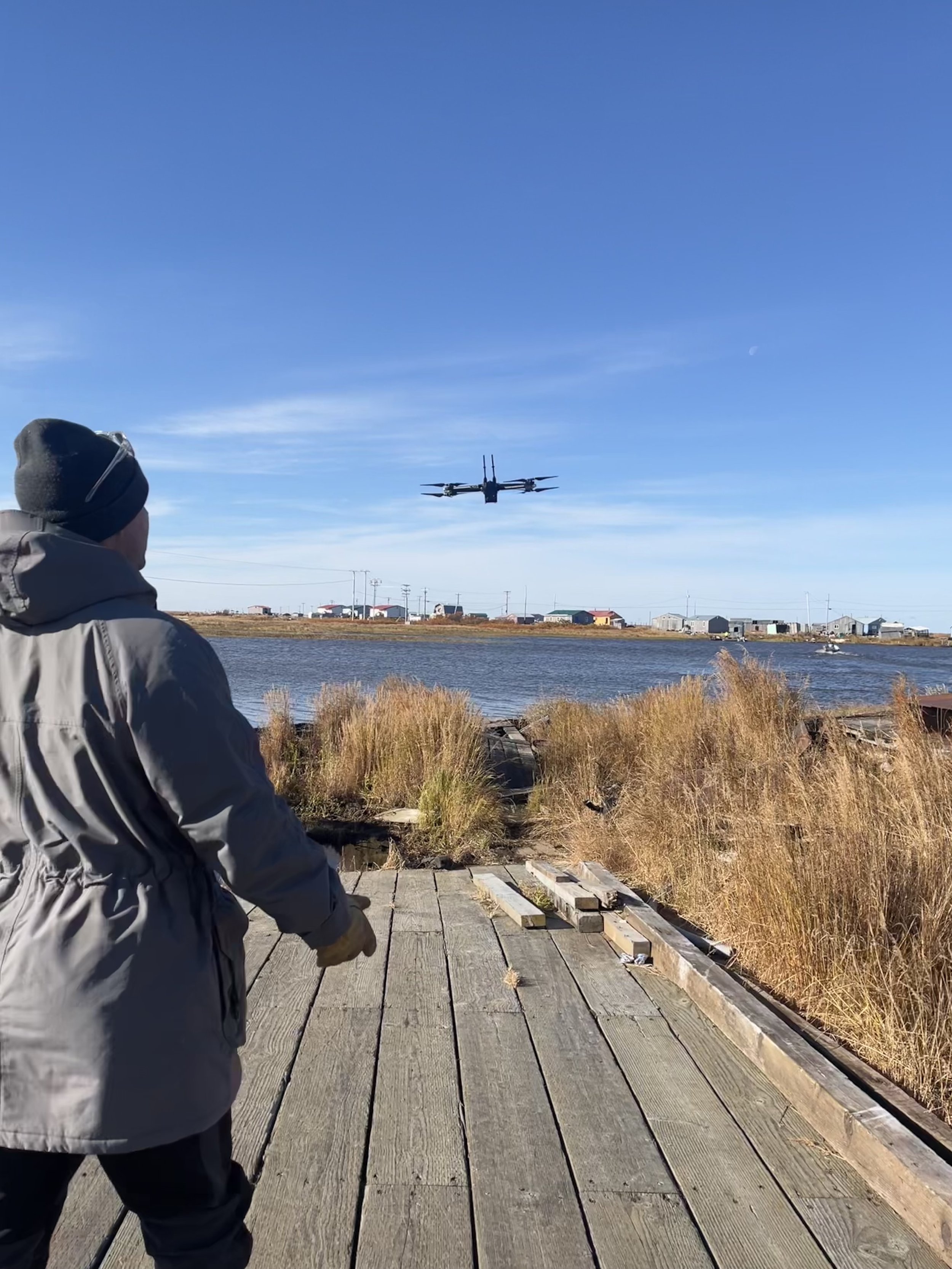
As the village of Nunapitchuk vies for funding to relocate, they need paperwork, proof, and plans. This fall, Nunapitchuk was selected as a testing ground for a new approach to climate-driven village relocation.
In the second of a four part series, I visit the law enforcement building. It sits on the shore of the dynamic Johnson River, which runs through the village. And the building is right on the shore. The riverbank has eroded to a foot away from one of the building's stilts.